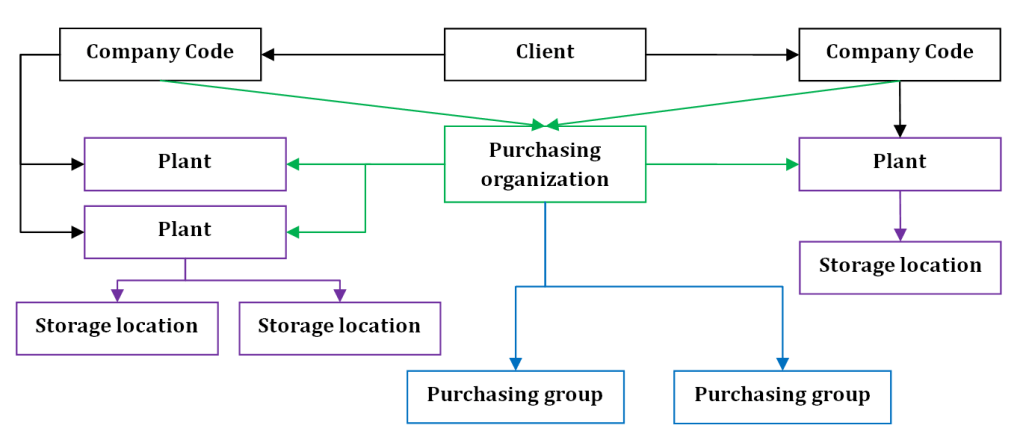
In the area of SAP, the purchasing structure of a company refers to the organizational layout governing how procurement processes and decisions are executed. It ensures the streamlined flow of goods and services within an organization and to its external stakeholders. You can read about Client and Company code here.
Plant
a. General Description
Plant is a central organizational unit within the Logistics module. It plays a vital role in several logistics processes, primarily in inventory management, production, and distribution. A Plant can represent a manufacturing location, a distribution center, a storage area, a retail location, or even a service center.
Associating materials or products with a specific plant enables detailed tracking of inventory and production activities, ensuring real–time data accuracy. By examining historical data associated with each plant, organizations can derive insights for optimized production planning and inventory management. SAP’s plant structure allows businesses to employ differentiated operational strategies tailored to each location’s specifics.
b. Configuration
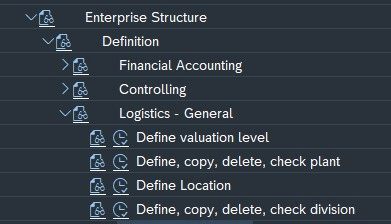
1) SPRO – Enterprise Structure – Definition – Logistics General – Define, Copy, Delete, and Check Plant (Transaction V_T001W). Here you can establish or modify plants by assigning a unique code, name, and other essential specifications:

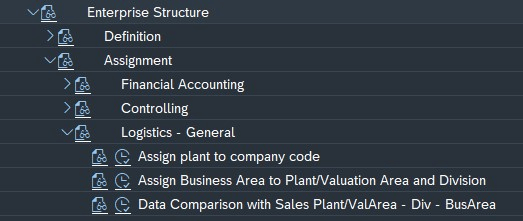
2) SPRO – Enterprise Structure – Assignment – Logistics General – Assign plant to company code (transaction OX18).:
c. Influence on the SAP system
Material Management (MM): The plant plays a role in the entire supply chain process – from procurement to inventory management. Materials are typically managed in a specific plant.
Production Planning (PP): The plant is crucial in determining where products are manufactured or where services are rendered. Production planning processes are executed at the plant level.
Sales and Distribution (SD): In the distribution chain, the plant represents the location from which goods are shipped or where services are provided. It’s used to determine delivery times and availability.
In Plant Maintenance (PM), a plant can represent a location where maintenance activities are performed.
Integration with Finance and Controlling (FICO): The plant’s financial aspects, such as valuation and costing are integrated with the FICO module.
Warehouse Management (WM): A plant can also specify locations like warehouses, distribution centers, depending on the specific use case within the enterprise.
Storage Location
a. General Description
Storage Location is a detailed organizational unit that denotes the exact location within a plant where goods are stored. It provides an additional layer of information for inventory management, aiding in specifying stock locations more precisely. A storage location could represent anything from a warehouse, a bin within a warehouse, a shelf, or even an outdoor storage yard. This specification is crucial for streamlined goods movements, inventory tracking, and order fulfillment.
Storage Location in SAP enables organizations to micro-manage their inventory at granular levels, ensuring efficient goods movement, precise tracking, and enhanced logistics processes. Depending on the nuances of each Storage Location, such as its capacity, turnover rate, and proximity to production lines or shipping areas, companies can implement customized inventory strategies.
b. Configuration
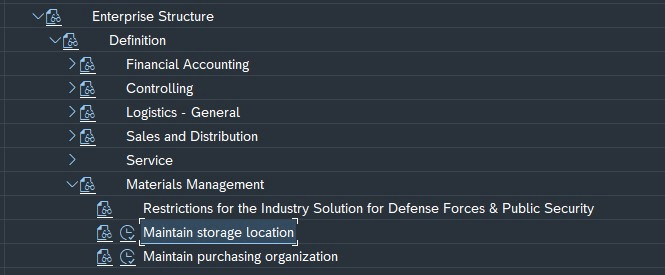
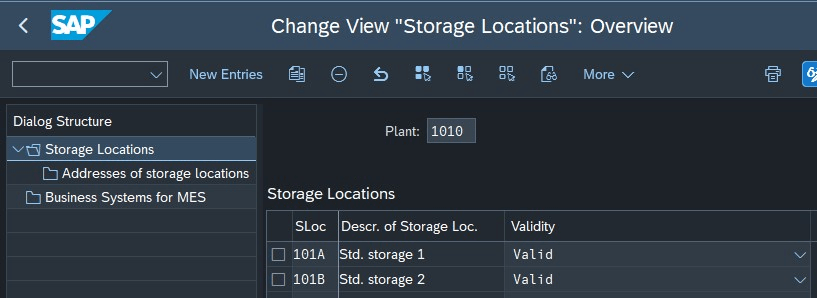
SPRO – Enterprise Structure – Definition – Materials Management – Maintain storage location (transaction OXO9). Here, you can define or adjust storage locations by assigning a unique code, description, and other relevant attributes and then linking it to its respective Plant:
c. Influence on the SAP system
Material Management (MM): The storage location is integral for detailed inventory management. It facilitates exact tracking of where specific batches or stock are situated within a broader plant structure.
Goods Movement: When conducting goods receipt, goods issue, or stock transfers, the storage location provides specificity, ensuring accurate and efficient stock movements.
Sales and Distribution (SD): During the sales order process, the availability check can be refined using the storage location, providing more accurate delivery commitments.
Production Planning (PP): For manufacturing processes, raw materials and finished goods’ exact location can be tracked using storage locations, aiding in efficient production planning.
If the Warehouse Management module is active, storage locations can be linked to specific warehouses, allowing for even finer control over inventory at bin or even slot level.
Purchasing Organization
a. General Description
The Purchasing Organization is an organizational unit within logistics that structures the procurement function of an enterprise. It plays a primary role in the buying or external procurement process, representing the entity responsible for procurement activities from negotiating with vendors, finalizing prices, securing bulk discounts, and shaping enhanced contractual terms to strategizing overarching procurement methodologies.
Different purchasing organizations can be created for diverse geographical regions or for different product categories, allowing for flexibility in terms of purchasing policies, vendor negotiations, and pricing. This entity can span across multiple Company Codes or be exclusive to one. It can be associated with multiple plants or solely tied to one.
All procurement documents, such as purchase requisitions, purchase orders, and contracts, have information about the Purchasing Organization and are managed and processed accordingly. It holds authority on determining and maintaining conditions related to procurement, such as pricing conditions, discounts, and surcharges.
b. Configuration
1) SPRO – Enterprise Structure – Definition – Materials Management – Maintain Purchasing Organization. Here, you can establish or modify Purchasing Organizations by allotting a unique identifier, naming it, and defining associated attributes. It’s possible to configure additional settings like currency, terms of payment, and more based on specific business requirements:

2) SPRO – Enterprise Structure – Assignment – Materials Management – Assign Purchasing Organization to Company Code. Here, you can define the association between Purchasing Organizations and company codes:

3) SPRO – Enterprise Structure – Assignment – Materials Management – Assign Purchasing Organization to Plant. In this section, you can define which Plants the Purchasing Organization can purchase for.
The configuration and structure of the Purchasing Organization are tailored based on a company’s specific procurement needs, strategic vision, and operational landscape.
c. Influence on the SAP system
Vendor Relationship: Each Purchasing Organization can have its list of vendors, and it’s responsible for maintaining and fostering relationships with these external partners.
Pricing and Conditions: The Purchasing Organization plays a central role in negotiations, determining prices, discounts, and terms for the goods or services procured.
Contract Management: It handles contract negotiations and maintains vendor contracts, schedules, and terms.
Procurement Strategy: Different Purchasing Organizations might adopt varied procurement strategies based on regional policies, vendor availability, or product categories.
Integration with other modules: While it’s primarily a part of the Materials Management (MM) module, the Purchasing Organization also collaborates with other modules, such as Supplier Relationship Management (SRM), Finance (FI), and Controlling (CO), throughout the procurement process.
Purchasing Group
a. General Description
The Purchasing Group represents a specialized segment within the procurement architecture of an organization, dealing primarily with day-to-day operational tasks in the buying process. These can range from creating purchase orders, interacting with vendors, and ensuring adherence to the terms of purchase. Each Purchasing Group could represent an individual buyer or a team of buyers, each tasked with specific procurement responsibilities.
The flexibility of the Purchasing Group design allows companies to have as many or as few groups as needed. For instance, a vast enterprise with diversified product ranges might necessitate multiple Purchasing Groups for efficient procurement, while a smaller firm might only need one or two. The essence of the Purchasing Group is to streamline the procurement process, making it more organized and efficient.
b. Configuration
SPRO – Materials Management – Purchasing – Create Purchasing Group. Here, you can create or modify Purchasing Groups by assigning a distinct identifier, naming it, and specifying related details.
c. Influence on the SAP system
Operational Efficiency: The Purchasing Group ensures that procurement activities are streamlined and organized, leading to quicker turnaround times and minimized errors.
Vendor Interactions: Each Purchasing Group can manage its set of vendors, making vendor interactions more efficient and personalized.
Document Management: They play a pivotal role in handling various procurement-related documents such as purchase orders, thereby ensuring that the terms of purchase are consistently followed.
Strategic Procurement: By having specialized Purchasing Groups, companies can ensure that procurement strategies are implemented effectively, whether it’s bulk buying, securing discounts, or negotiating favorable terms.
Purchasing Area
a. General Description
Purchasing Area is a detailed organizational unit within the procurement process that defines a specific geographical or functional area responsible for procuring materials and services. Similar to a Storage Location in inventory management, a Purchasing Area provides a higher level of specificity when determining the source of procurement and managing the purchasing process. It helps streamline procurement activities, optimize sourcing strategies, and enhance overall procurement efficiency.
Just as Storage Location in SAP allows for detailed inventory management, Purchasing Area allows organizations to manage their procurement operations more granularly. This ensures precise control over procurement activities, supplier relationships, and sourcing decisions, tailored to the unique requirements of each Purchasing Area.
b. Configuration
SPRO – Enterprise Structure – Definition – Materials Management – Assign Purchasing Organization to Plant (transaction OX18). Here, you can define or adjust Purchasing Areas by associating them with specific Purchasing Organizations and Plants. This linkage enables a clear description of responsibilities for procurement activities. If the Advanced Procurement module is active, Purchasing Areas can be linked to specific procurement strategies, allowing for even finer control over sourcing and procurement strategies.
c. Influence on the SAP System
Materials Management (MM): The Purchasing Area plays a pivotal role in managing procurement activities. It helps determine the specific geographical or functional scope for sourcing materials and services, allowing for efficient procurement processes.
Supplier Relationship Management: The Purchasing Area is essential for defining and managing relationships with suppliers based on geographical or functional considerations. It aids in optimizing supplier selection and negotiation processes.
Materials Requirement Planning (MRP): By associating Purchasing Areas with specific plants, MRP processes can be finely tuned to account for the procurement needs of different areas, enhancing production planning.
Integration with Other Modules: Purchasing Areas have an impact on various SAP modules such as Supplier Management, Inventory Management, and Financial Accounting. The specific Purchasing Area can influence how materials are sourced, received, and accounted for across the system.
Depending on a company’s specific business configuration and nuances, these organizational units can interact in diverse ways, crafting a flexible and scalable structure for managing procurement activities in SAP. This adaptability ensures that SAP’s procurement framework can be tailored to fit any organizational size, from small enterprises to global conglomerates. By defining how these units interact, a company can streamline its purchasing processes, optimize vendor relationships, and achieve greater cost efficiencies. Furthermore, the modularity of the SAP system means that as a business evolves, its procurement structure can be adjusted without major overhauls, thus future–proofing its operations.
 © ERPFlowTech
Leave a comment